
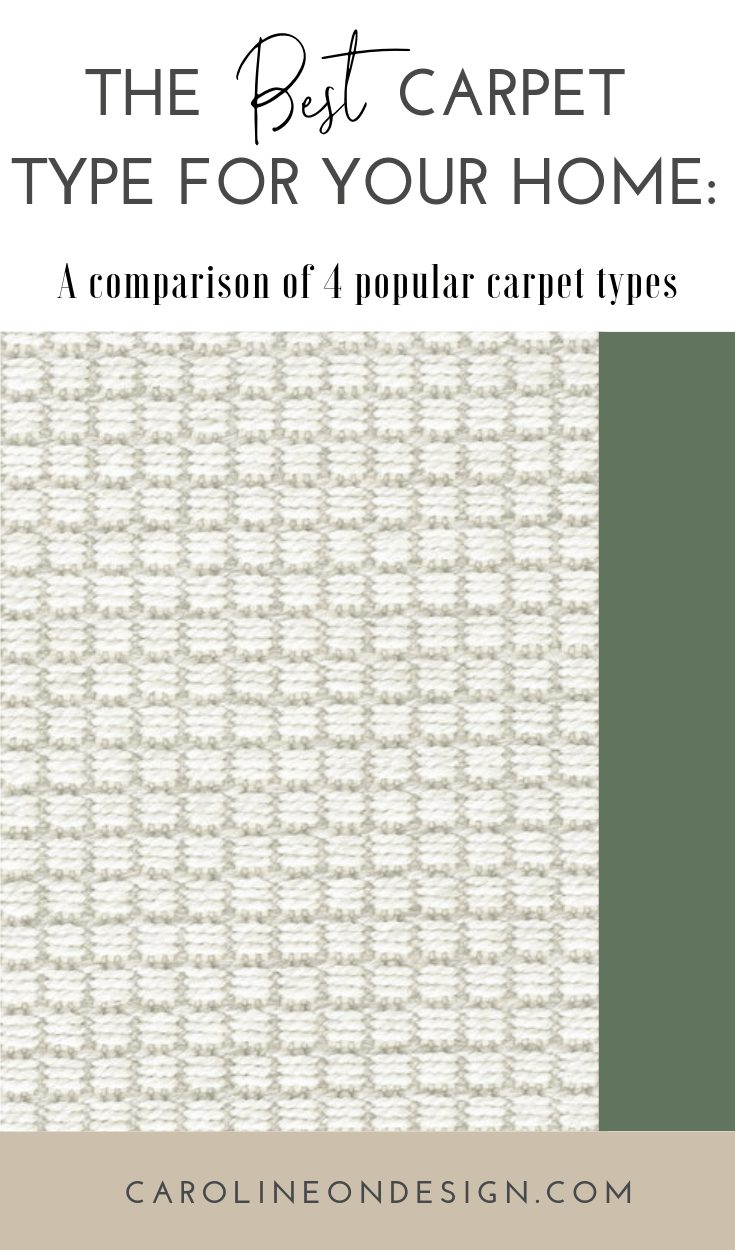
Are you ready to pick out carpet for your new home (or possibly you’re replacing old carpet)?! Are you confused about what the BEST type of carpet is … or what your options EVEN ARE?!
I’ve got you covered, girl! In this post, I’ll give you an overview of the TOP FOUR carpet fiber types so that you will better understand your options and can confidently make carpet decisions for YOUR home!
We’ll discuss the four main types: nylon, polyester, wool, and polypropylene (aka, olefin) PLUS I’ll answer some of your top carpet fiber questions!
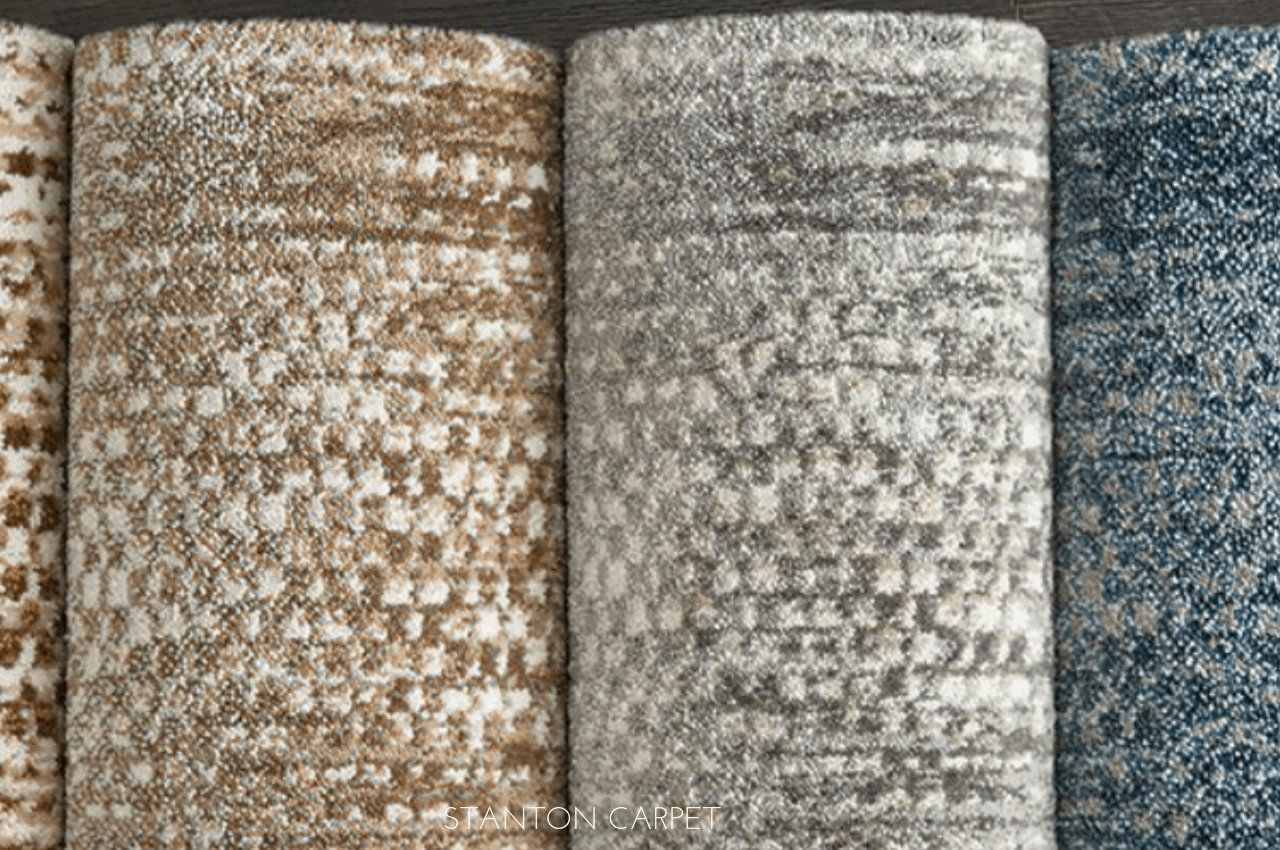
It’s important to note that when we are talking about carpet types, we are actually talking about the various carpet FIBERS. Each type of carpet fiber has its pros and cons … and your fiber choice should depend on your budget and the amount of traffic in the area.
Here is a quick explanation of synthetic and natural fibers so you know the basic differences:
SYNTHETIC CARPET FIBERS
- Not found in nature; machine made
- Synthetic fiber is generally more stain resistant than natural fibers
- More practical than natural carpet fibers
- Typically less expensive than natural fibers
NATURAL CARPET FIBERS
- Natural fibers can be found in NATURE (did you see that coming?!)
- Wool is highly durable but cotton (another natural fiber) is not as durable
- Natural fibers are typically more expensive than synthetic
Related Post: HOW TO CHOOSE THE BEST FLOOR TILE TYPE
WHAT ARE THE DIFFERENT TYPES OF CARPET?
NYLON CARPET FIBER
Nylon is a synthetic carpet fiber, and it is the number ONE choice for both residential and commercial carpet! Although nylon is the strongest (most durable) of all carpet fibers, it can still feel very soft underfoot!
Nylon has some great things going for it: it is strongly resistant to insects, mold, mildew, rot, stains, and abrasions. It is also good at not holding onto allergens. Nylon typically maintains its fiber height (i.e., it doesn’t flatten from traffic and weight), it’s easy to maintain and it holds its color very well. Due to these positives, nylon is suitable for high-traffic areas.
Nylon is moderately priced, so it is within many people’s budgets. It isn’t quite as expensive as wool, but it’s more expensive than polyester and polypropylene. A mid- or high-quality nylon can last for several (12-15ish) years.

NYLON CARPET ON MY STAIRS (I *LOVE* THIS STANTON CARPET!)
Related Post: HOW TO CHOOSE AND LAY A STAIR RUNNER: AN OVERVIEW
POLYESTER CARPET FIBER
Polyester is another synthetic carpet fiber that is easy to clean and quite durable. While polyester does feel quite luxurious, it does NOT hold its fiber height under traffic and weight (aka, it stays flattened from furniture weight and traffic) as well as other carpet fibers so it’s not recommended for high-traffic areas.
Overall polyester is able to hold onto vibrant colors; although it can fade if in direct bright sunlight regularly. Polyester is resistant to water soluble stains, it’s soft, and is a budget-friendly choice. Polyester is also a great choice for people with allergies.
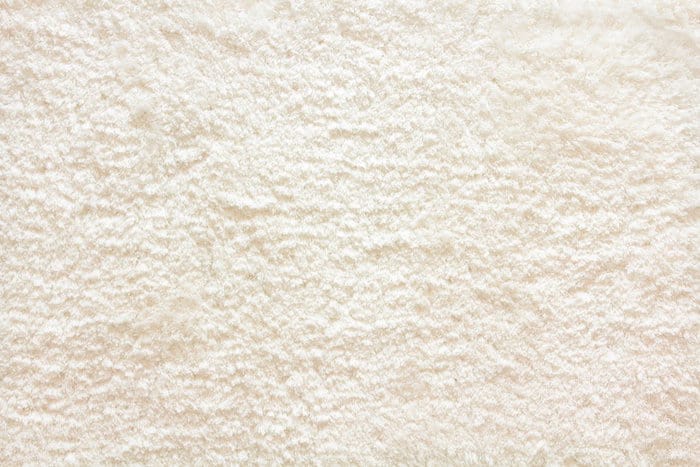
POLYESTER CARPET FIBER via STANTON CARPET
WOOL CARPET FIBER
Wool is a (stunning) purely natural type of carpet fiber! It is an animal fiber taken from the hair of sheep. Wool is certainly the top carpet choice if you have a HIGH budget! It is one of the MOST expensive types of carpet … even more expensive than high-end nylons.
Like nylon, wool has many great things going for it: it’s luxurious, long-lasting, durable, (generally) stain resistant, soft, dense, can be dyed in many colors, able to hide soil better than synthetic fibers, and it maintains fiber height well!
Unfortunately, there are some negatives that come with this natural fiber type: wool can fade in prolonged direct sunlight, it can suffer from insect damage (unlike synthetic fibers which are insect resistant), it isn’t as highly resilient as nylon, allergens can thrive in wool, low-grade wool is susceptible to staining, high-grade wool is EXPENSIVE, and wool carpet can shed (I do notice mild shedding with my wool area rugs).
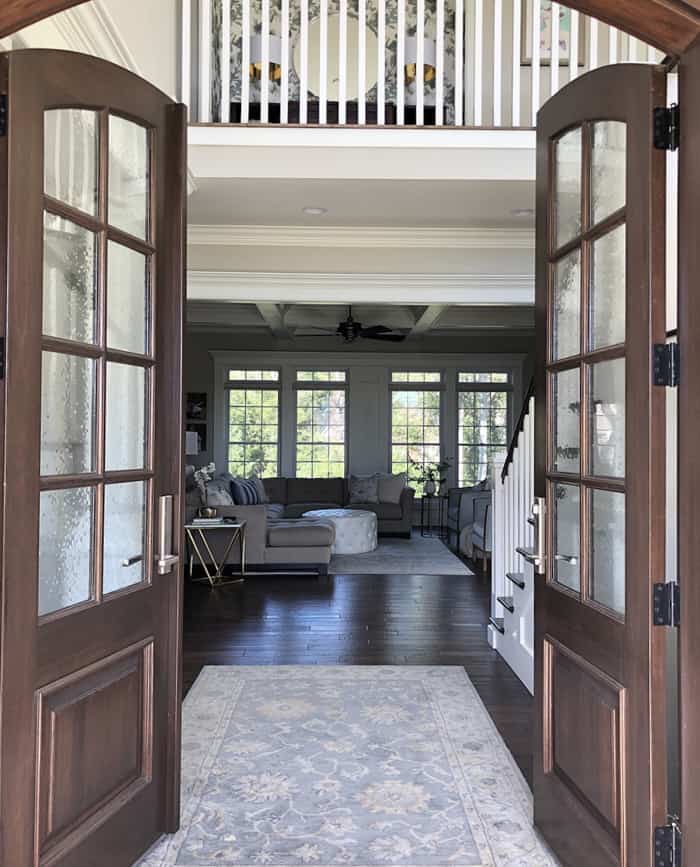
WOOL RUG IN MY FOYER
POLYPROPYLENE CARPET FIBER (aka OLEFIN)
Polypropylene (aka, Olefin) is a synthetic carpet fiber that is similar to natural wool; it is often used as a synthetic wool substitute. Olefin fibers are strong … they resist mildew, moisture, abrasion, and fading from sun exposure.
Olefin is easy to clean, almost as soft as nylon, and fairly stain resistant (although it is prone to holding onto oils which then collect dirt).
Olefin is the most budget-friendly option; it’s less expensive than nylon, polyester, and wool.
There are mixed reviews on olefin’s level of durability; in general, olefin does NOT appear to be very durable, nor is it a suitable option for high-traffic areas. Additionally, olefin resists stains unevenly (i.e. stains will stand out prominently).
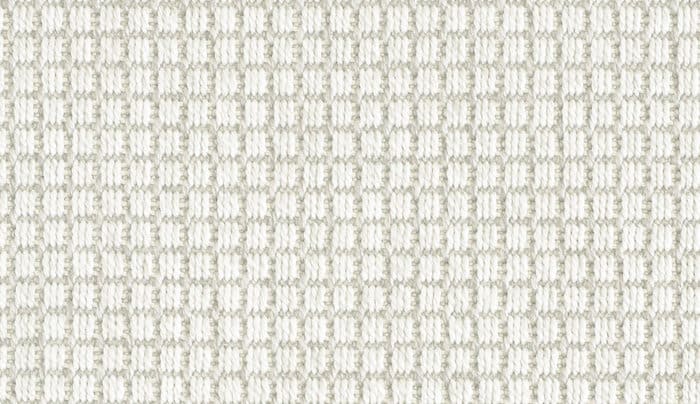
POLYPROPYLENE via STANTON CARPET
Related Post: SOLID HARDWOOD VS. ENGINEERED WOOD FLOORING
WHAT IS THE MOST DURABLE CARPET FIBER?
NYLON and WOOL
WHAT CARPET FIBER IS BEST FOR ALLERGIES?
SYNTHETIC carpet fibers such as nylon, polyester, and polypropylene (stay AWAY from natural fibers such as wool!)
WHAT CARPET FIBER IS EASIEST TO CLEAN?
NYLON
WHAT CARPET FIBER LASTS THE LONGEST?
NYLON and WOOL
WHAT IS THE BEST TYPE OF CARPET FIBER?
This depends on YOUR needs, but, generally, this would be NYLON!
CONCLUSION
We’ve covered the basics of four top used carpet fiber types (nylon, polyester, wool, and olefin) … as well as the difference between synthetic and natural carpet fibers.
As with any home design decision, there is NO right or wrong answer! All of these carpet fibers have their pros and cons (and all are great options) … you just need to decide what aspects are MOST important to YOU and your home’s needs (e.g. cost, stain resistance, durability, etc.)!
If you are on the search for hard surface flooring for your new home as well, I recommend reading SOLID HARDWOOD VS. ENGINEERED WOOD FLOORING and HOW TO CHOOSE THE BEST FLOOR TILE TYPE!