

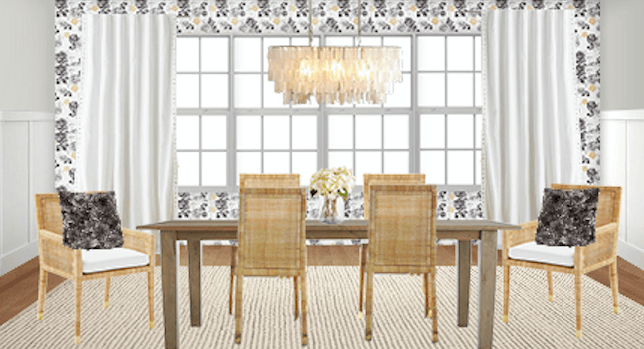
So you’ve decided it’s time to update your dining room, or maybe you just moved into a new home and are starting from scratch. Either way, I’ve got you covered with six easy steps you can follow to style your dining room! I will take you on a step-by-step journey of how I styled the design above.
Hint: you can follow these steps when designing ANY room … not just your dining room!
Affiliate links are used in this post for your shopping convenience. Click here to read my full disclosure policy.
STEP 1 : GATHER INSPIRATION
Pinterest offers a wealth of information on just about anything … but it is especially useful in finding home decor ideas! Create a Pinterest board filled with photos of room designs, textures, colors, patterns, and materials that you love. You can see my Pinterest Dining Room board here.
Once your board is complete, look for common threads in the photos to determine the design aesthetic you are going for. This is useful in designing ANY room; not just your dining room!
STEP 2: CHOOSE A FOCAL POINT
A focal point can be something you already own or something you want to buy for the space. It can be a unique piece of wall art, a family portrait, or an artistic light fixture to name a few examples. The opportunities are endless!
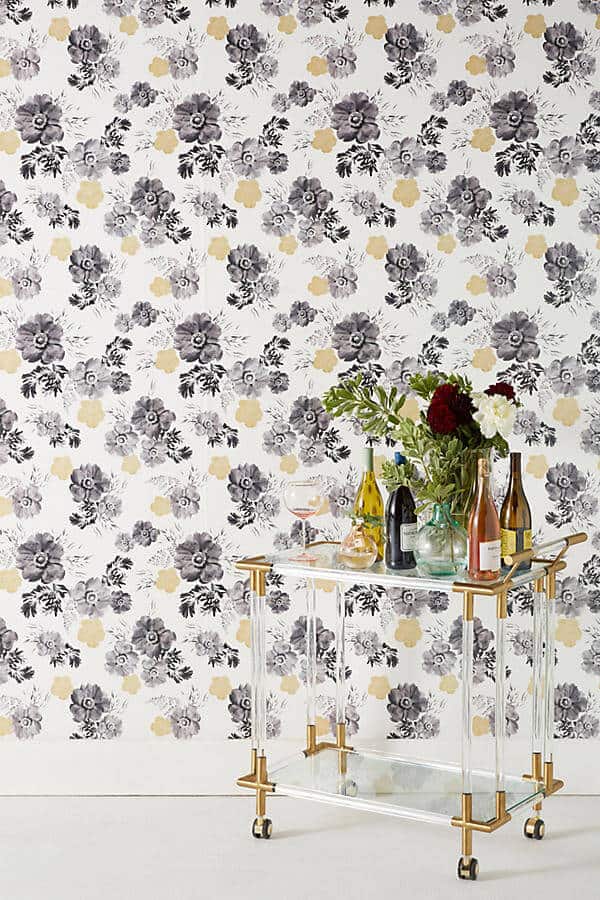
The focal point for this dining room design is the bold black and yellow patterned wallpaper. I love the Anthropologie Dorie wallpaper and think it is the perfect statement piece in this otherwise neutral dining room!
If you choose to add wallpaper, covering just one wall not only creates a focal point, but it saves a TON of money in both product and hanging fees! It also saves a TON of time if you plan to hang the paper on your own!
STEP 3: CHOOSE YOUR RUG
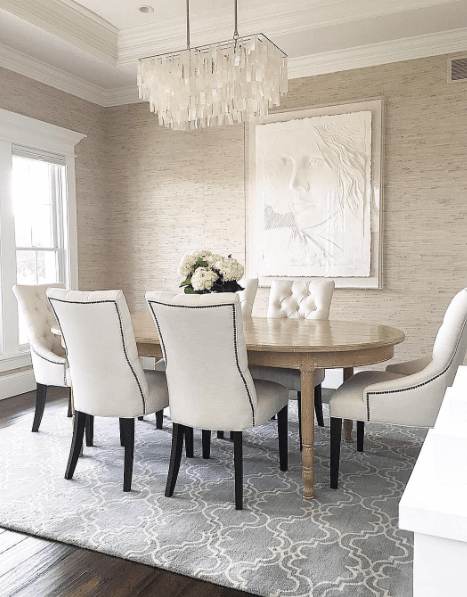
I chose this neutral Serena and Lily Rug to anchor the room. You can see the gorgeous texture in the photo below! If you choose a solid rug to use in your dining room, try to find one with a little bit of texture or very minimal pattern that resembles texture.
If you do not have pattern on your wall, the dining room is a great place to add a patterned rug because the rest of the room tends to remain very neutral. A unique or bold rug can serve as your focal point!
STEP 4: CHOOSE YOUR FURNITURE
I started this dining room design with these gorgeous Balboa chairs from Serena and Lily. I absolutely love this style of chair … but they are a SPLURGE! Because they are more expensive, I chose a less expensive table and chandelier to offset the price of these investment pieces of furniture (an investment piece is one you love and are willing to splurge on because you will it keep for years!). I added some beautiful, lower cost chair alternatives in Shop the Post below.

When choosing furniture, consider how you will use your dining room. If children will eat in there, you want to stick to child-friendly or dark fabrics … or just stay away from upholstered items altogether!
If you plan to entertain in your dining room often, choose a table that can hold up to wear and tear. In other words … don’t choose a table that is so delicate you get nervous any time someone sets a water cup on it!
Choose your table and chairs first and then move on to accent pieces such as your buffet. You don’t need to buy all your furniture from one store. Take your time and find unique pieces that complement each other but aren’t the exact same wood or texture!
STEP 5: CHOOSE THE FINISHING TOUCHES: LIGHTING AND ACCENTS
Now it is time to choose the finishing touches that really add drama to the space!
I actually have this exact West Elm Capiz Chandelier hanging in my dining room! Not only is it GORG, it is also a great price (under $400) … and even lower when West Elm offers a promo!
The simple white drapes with studded detail add a touch of sophisticated glam against the dark patterned wallpaper!
To add more texture, I placed the charcoal faux fur pillows on the arm chairs. I implemented an organic component with the simple glass vase of faux flowers from Pottery Barn to complete the look.
STEP 6: CHOOSE PAINT COLOR
Last but not least, choose your paint color.
You don’t want your paint color to determine your color palette; you want your design to determine your color palette and your paint to complement the design.
There are two tricks I like to use when choosing a paint color:
- Purchase the smallest sample available of your top 3-5 color choices. Purchase 3-5 pieces of Poster Board (or you can use drywall remnants if you have some) and paint each piece a different color. Tape the Posters to the wall (or rest against the wall) and leave there for a couple of days. See the various colors in different lighting before making a decision.
- Tint your primer to the paint color you want to use. This will give you a good idea of how the color will look on your walls. If you hate the tinted primer, you still have time to change your mind and find a different paint color!
If you have an open floor plan, you can keep the cohesive look of the same paint color you use in the main spaces of your home.
A note re: the design board … the wall color is NOT a paint color; it is simply a color from my Photoshop program.
When following these steps, keep in mind that you ALWAYS want to measure before purchasing any furniture or accent pieces. Quick tip: draw out the basic floor plan of your room on graph paper (one foot per square) and then draw in the furniture to scale and ensure it fits. It is helpful to map out items in the room with Painter’s Tape.
There are also many apps and computer programs that allow you to “see” how furniture fits in a room. My fellow blogger, Tamara, has a great article here.
I hope this post gives you some guidance and confidence to style your dining room on your own!