

If you’re designing your custom home, you’re probably trying to avoid common floor plan mistakes that lead to regrets.
You may have even searched something like “what are common floor plan mistakes to avoid?” or “what layout mistakes should I watch for before approving my plans?”
After auditing 300+ floor plans — from stock plans to fully custom designs — I can tell you this with full confidence: the same common floor plan mistakes show up again and again.
I even see these mistakes in some plans drawn by some architects.
And it’s not because homeowners and architects aren’t thoughtful.
It’s because some details are easy to overlook when you’re reviewing a layout on paper (especially if you’ve looked at it over and over and over again).
In episode 69, I shared 11 floor plan mistakes to avoid, but today I want to focus more on the patterns I see most often that lead to daily frustration and regrets.
Listen to this episode or read the blog post below.
Links Mentioned in this Episode:
Free On-Demand Class: 4 STEPS TO BUILD WITHIN BUDGET AND WITHOUT REGRETS!
What Are the Most Common Floor Plan Mistakes to Avoid?
After reviewing hundreds of clients’ floor plans, most issues fall into one of four categories:
- Poor privacy in the layout
- Not enough natural light
- An awkward or undefined entry
- Poor kitchen and garage placement
None of these are dramatic design flaws.
They’re subtle.
But subtle layout decisions shape how your home feels every single day.
Floor Plan Mistake #1: Poor Privacy in the Layout
One of the most common floor plan mistakes I see is a lack of privacy in key areas of the home.
When you’re reviewing a floor plan, it’s natural to focus on room sizes and square footage.
But privacy doesn’t always get evaluated the same way.
This is why people end up with:
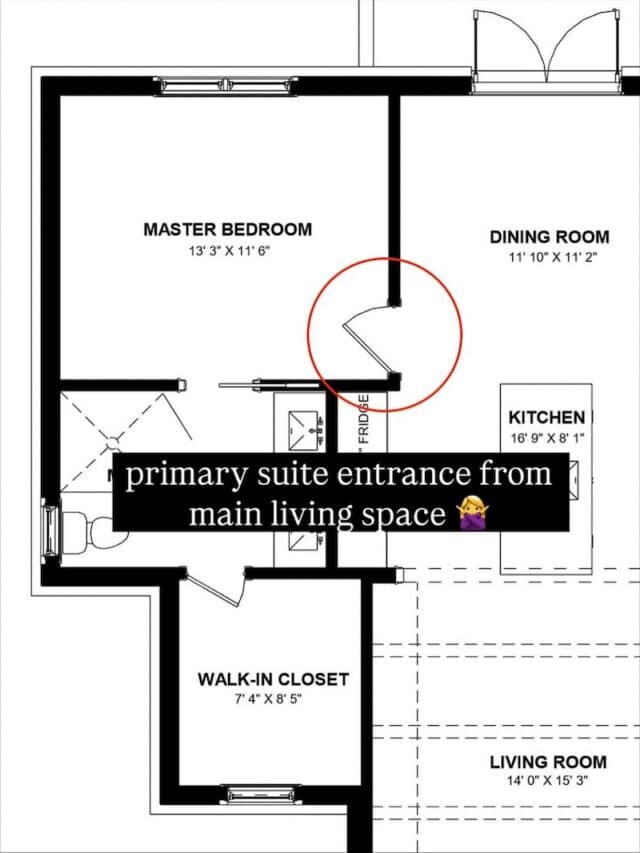
- A primary bedroom door directly off the living room
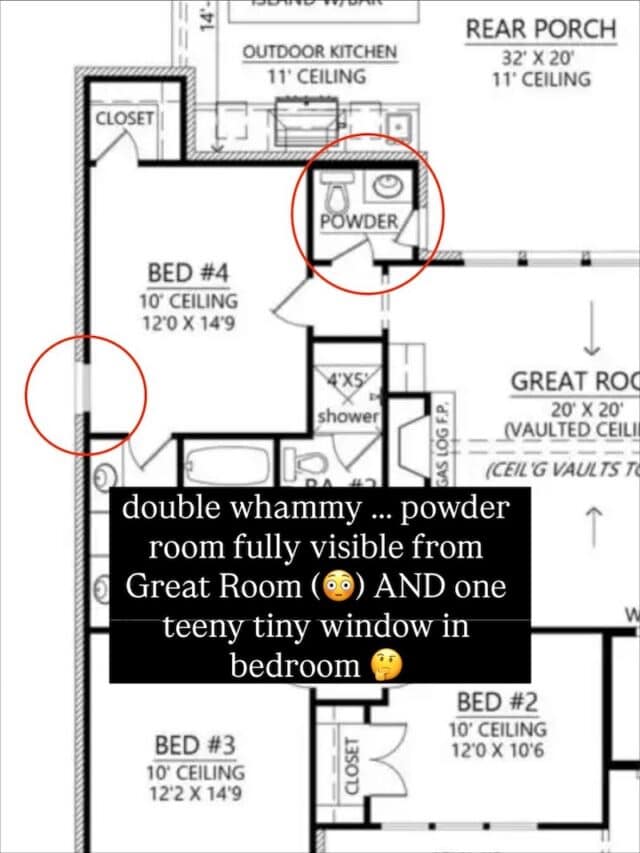
- A powder room fully visible from the great room
- A bathroom door IN the foyer
On paper, these layouts technically work.
In real life, they can feel exposed.
Privacy in a floor plan isn’t just about walls. It’s about what can be seen — and heard — from people in the gathering spaces.
Before finalizing your layout, pause and ask:
- What can guests see from here?
- Is there a buffer between public and private spaces?
- Does the primary suite feel like a retreat?
Answering these questions will help you determine how much privacy you have in your home.

Floor Plan Mistake #2: Not Enough Natural Light in Bedrooms
Another common pattern is undersized (or too few) windows — especially in secondary bedrooms.
I see plans all the time where secondary bedrooms have one teeny, tiny window, and it’s usually in a corner.
Natural light affects more than aesthetics. It impacts:
- How large a room feels
- Mood and comfort
- Long-term livability
- Resale appeal
Secondary bedrooms matter just as much as primary spaces.
If rooflines allow, consider increasing your window size or adding an additional window.
These are small decisions during the design phase that make a noticeable difference once you’re living in the home.
Natural light isn’t just a design preference.
It’s a livability factor.

Floor Plan Mistake #3: An Awkward or Undefined Entryway
When homeowners think something feels “off” in a layout, traffic flow is often the reason.
I frequently see:
- Front doors that open directly into a living room
- No visual separation between foyer and living space
A well-designed floor plan is inviting and guides you into the home.
Your entry doesn’t need to be formal at all, but it should feel intentional.
That might mean:
- A defined foyer space
- A slight hallway shift
- A partial wall or cased opening
- Clear furniture placement
The goal isn’t perfection.
It’s intentional design.

Floor Plan Mistake #4: Poor Kitchen and Garage Placement
This is one of the most overlooked functional layout mistakes I see.
It doesn’t seem significant at first.
And actually, some people don’t think this would be an issue.
But once you’re living in your house, you’ll realize it’s an issue … daily.
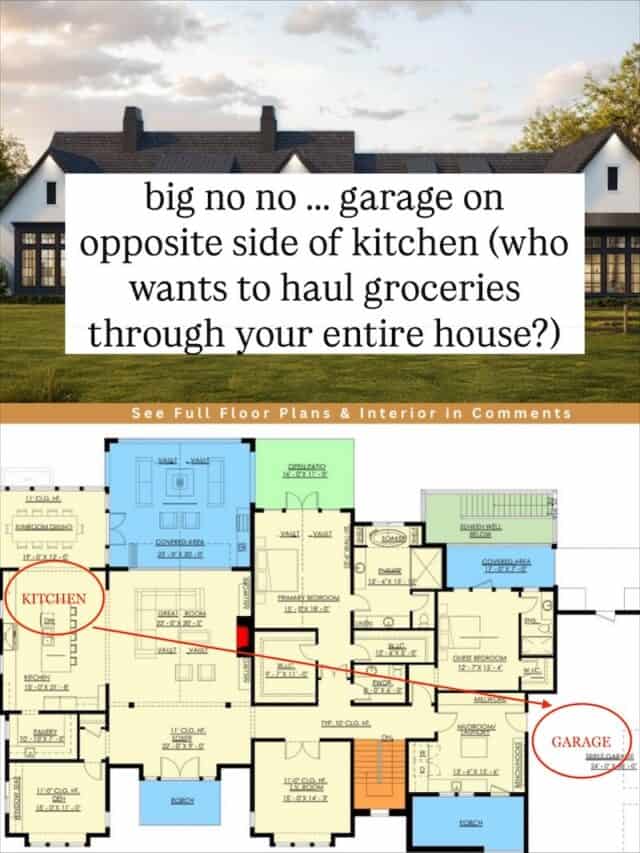
On occasion, I review floor plans where the garage is located on the opposite side of the house from the kitchen.
That means every grocery trip requires carrying bags across the entire home. Who wants to do that?
Design is about so much more than how a floor plan looks.
It’s about how the layout functions for YOUR family’s daily life.
When reviewing your layout, mentally walk through:
- Where groceries enter
- Where backpacks land
- Where shoes collect
- The path you’ll take most often
These everyday movements matter more than most people realize during the design phase.
Why These Floor Plan Mistakes Matter More Than You Think
Most floor plan regrets don’t come from dramatic errors. They come from subtle oversights.
It’s easy to focus on square footage, room count, and aesthetic renderings during the design phase. But those aren’t the things you’ll think about six months after moving in.
You WILL remember:
- Walking past a visible bathroom during every gathering
- Hauling groceries across the house each week
- Wishing you had just one more window in that bedroom
- Feeling like your entry never quite settles
Poor sightlines, lack of privacy, disrupted flow, insufficient natural light — these aren’t things you notice in a 2D drawing unless you intentionally look for them.
That’s why a thoughtful review process is SO important before construction begins … and exactly why I offer floor plan feedback sessions for my BEFORE YOU BUILD℠ clients.
The goal isn’t perfection. It’s intentional design that works for YOUR family — and that starts with a clear vision and clear priorities before you ever approve your plans.
How to Avoid Common Floor Plan Mistakes Before You Finalize Your Plans
Before approving your floor plan, take time to audit it.
Don’t just look at it.
Walk through it — mentally — room by room.
(or even better yet, get a 3d interior rendering)
Ask yourself:
- Does this layout protect privacy?
- Is there enough natural light in every bedroom?
- Does the entry feel intentional?
- Does daily life flow easily from garage to kitchen?
- Have I truly imagined living here?
FREE FLOOR PLAN CREATION WORKBOOK
If you’d like help creating your intentional floor plan (or auditing your existing plan), download my FREE Floor Plan Workbook.
It includes 25ish questions that will help you truly understand how YOUR family will live in your home … and this will affect every single layout decision you make.
Here’s the thing … once construction begins, layout changes become VERY expensive.
Most people don’t regret what they add to their floor plan.
They regret what they didn’t notice.
Clarity before building is what prevents regrets after building. 🙌
DOWNLOAD YOUR FREE FLOOR PLAN WORKBOOK HERE!