
When building or renovating a house, there is an unbelievable amount of decisions that you need to make … one of these decisions is whether you want inset vs. overlay cabinets.
When you think about your cabinets, you obviously think about what color and style you want. What you might not realize, however, is that this isn’t where the decisions stop. You need to decide how you want your doors and drawers placed on the cabinets.
There are three ways to place doors and drawers on framed cabinets: Inset, Full Overlay, and Partial Overlay. This was news to me when I was building my home, so I hope the information and photos below help you in understanding the differences so you can choose the best option for your home.
INSET CABINET DOORS
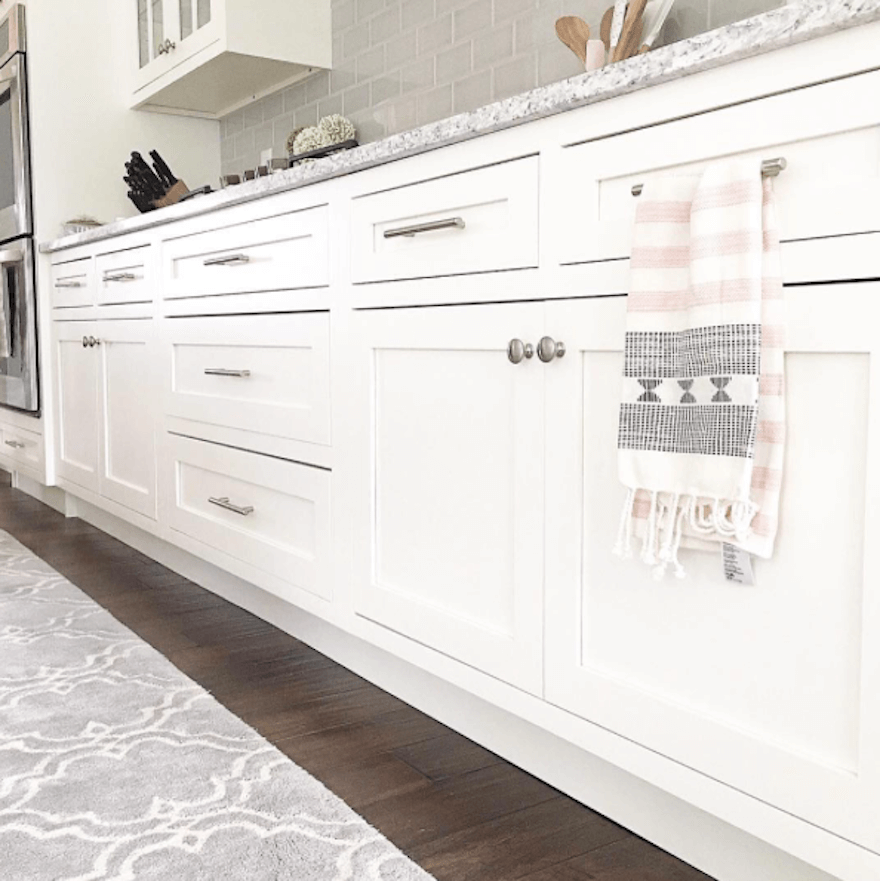
Inset Cabinet Doors, Shaker Style
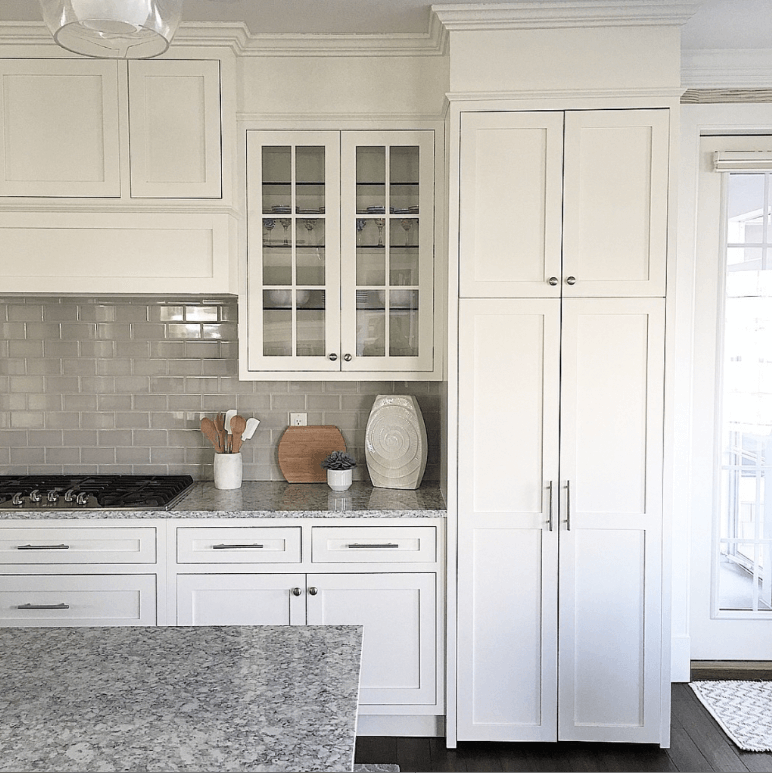
Inset Cabinet Doors, Shaker Style
Inset doors are set into the frame and provide a custom and smooth overall appearance. The doors, drawers, and frame all sit flush when closed.
Inset cabinets are priced quite a bit higher than overlay cabinets, and they do require hardware (or a push system) because you can’t simply open them with your fingers.
I have custom inset cabinets in both my kitchen and master bathroom. While I think the look is beautiful and streamlined, the gapping does annoy me at times!
PROS: higher-end look and cleaner lines, hinges can be visible or hidden
CONS: higher cost, gapping can be pretty obvious in places (see photo above), and there is less storage space because the doors are inset (although I have never had a problem … I have plenty of space for my dishes).
FULL OVERLAY CABINET DOORS
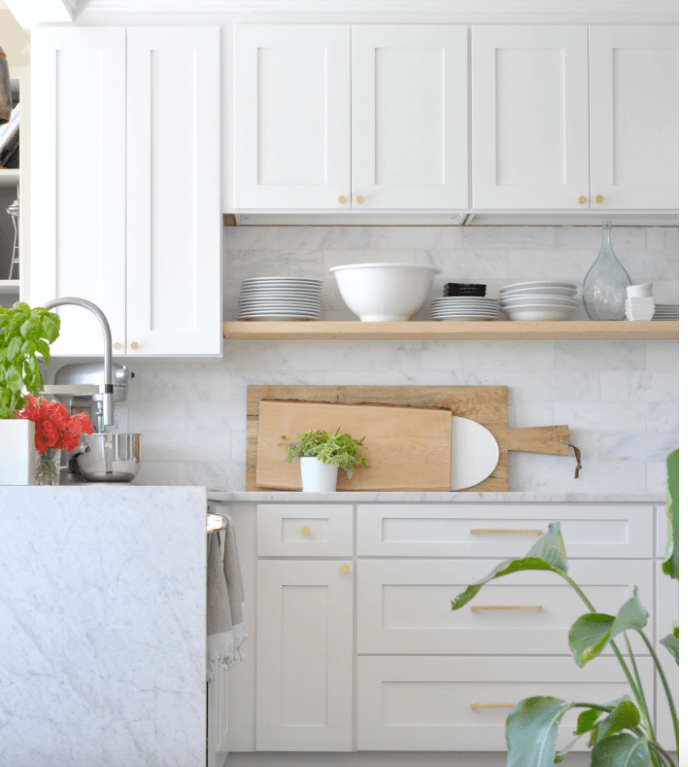
Full Overlay Cabinets in “House Updated” Brit’s kitchen! See more of her GORGEOUS kitchen HERE
Full Overlay cabinets offer a similar appearance to that of inset doors but with a lower price tag (yes, please!). The doors and drawers completely cover the cabinet face, providing a flat cabinet front similar to inset cabinets.
I opted for full overlay cabinets in my laundry room, basement bar, and secondary bathrooms. I think all of these cabinets look fabulous, and I saved A LOT of money since I didn’t do inset in these spaces.
This is the way to go if you want a higher-end look but your budget doesn’t allow for inset cabinets.
PROS: streamlined and sleek, less expensive than inset, and gapping between frame and door (or drawer) is not obvious like in the inset.
CONS: there really aren’t any cons other than the fact that they aren’t the higher-end inset
PARTIAL OVERLAY CABINET DOORS
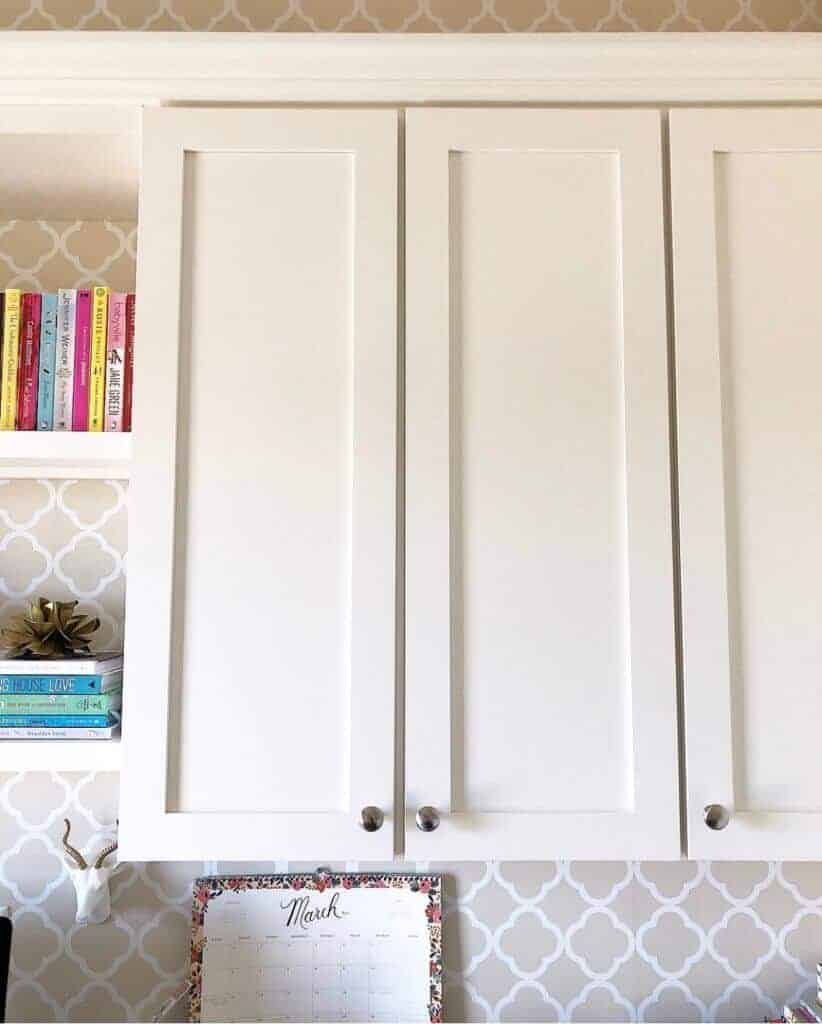
Minimal partial overlay cabinet doors in my office. Notice the small gap between doors.
Partial overlay cabinets are the most common and least expensive option. If you have a tight budget, this is the route you want to go!
These offer more of a traditional look and do not require hardware because there is finger space between cabinet doors. The door sits on the cabinet face, leaving a gap of about 1” between the doors. My home office cabinets (see photo above) have a very minimal partial overlay. Typically the cabinet frame would be exposed on either side of the cabinet door (see diagram below).
Both overlay options offer more storage space within the cabinet since the door sits on the outside of the frame.
PROS: least expensive option
CONS: doesn’t look as high-end as the other options
SHOP MY CURATED COLLECTION OF CABINET HARDWARE
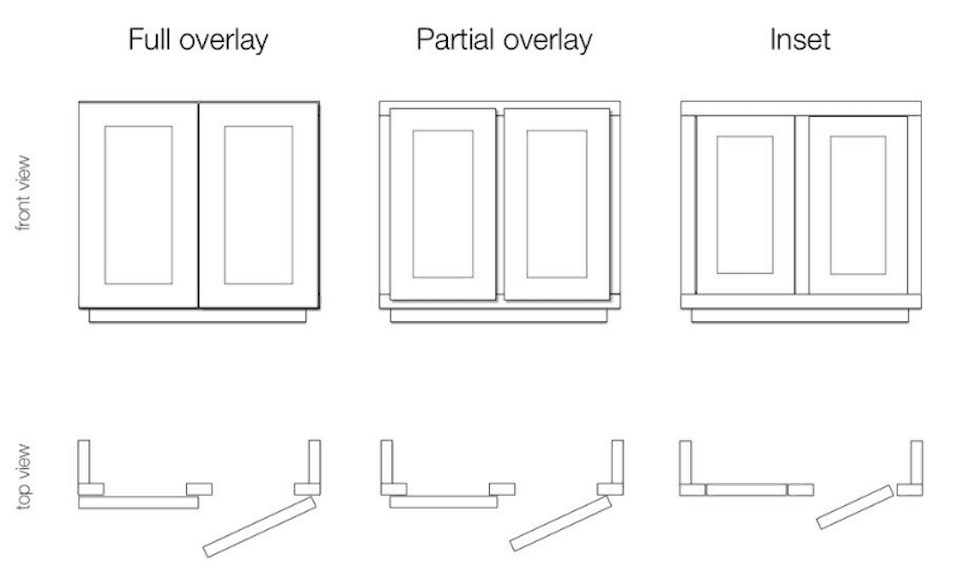
A great visual of inset vs. overlay cabinets from Panyl.com!
HOW TO CHOOSE: WHICH IS BETTER?
As with any house design decision, there is NO right or wrong answer. Simply go with the look YOU enjoy most and what style fits best within your budget.
I hope that you now feel more confident in knowing how to choose inset vs. overlay cabinets for your home. If you’d like a little bit of extra guidance in CONFIDENTLY making design decisions for your home, download my *FREE* guided Design Decision Worksheet.